Creamoda is de kruispuntorganisatie bij uitstek van elke onderneming die in België actief is in mode en kleding of confectie in ruime zin. Creamoda verdedigt haar leden op alle terreinen van het economisch leven. Creamoda adviseert, stimuleert en begeleidt haar leden op diverse vlakken, waarbij aan de leden – ondernemingen maatwerkservice geleverd wordt.
The Belgian Linen™ quality label is an internationally registered trademark. The label was created to promote linen from Belgium, widely known as the world’s finest linen.
Woven in Belgium
At least 85% flax in weight
Flax of European Origin
Europe’s finest flax
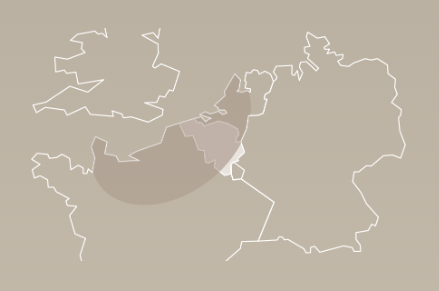
Flax thrives in this region of Western Europe. A moist and temperate climate and excellent soil quality provide for one of the best qualities of flax in the world. This region is situated between Caen and Amsterdam, Belgium being in the exact middle of it all.
Strictly governed
The Belgian Flax & Linen Association is the responsible and independent organization for authenticating fabrics as Belgian Linen™. Through membership, weavers can apply for a certification of their fabrics.
Once the Belgian Linen & Flax Association approves the certification, each batch of fabric is assigned a unique ID. Through this ID, buyers of the fabric and products based on it can always trace back the origins of the fabric.
Belgian Linen™ in your finished product
Buyers of our members’ linen fabrics can apply for a permit to use the Belgian Linen™ label as a marketing tool on their packaging and in their communication.
Mission
Fedustria vzw is the merger federation of the former non-profit associations Febeltex and Febelhout and represents companies from the Belgian textile, wood and furniture industry.
Together, these sectors realize a turnover of 10.9 billion euros with employment of 36,000 direct jobs in about 1,700 companies in Belgium. In other words, one of the most important sectors in the Belgian industrial landscape.
Fedustria’s mission is to help companies in the textile, wood and furniture industries in their successful development by safeguarding and strengthening their competitiveness. This is done by:
to act as a representative of these sectors,
through an active defense of the common interests of the member companies,
through a wide range of specialized services, by creating a common training and meeting place for members,
And we are not just talking about fashion, but above all about the most unknown innovative products that the textile sector has to offer and that you come into contact with every day. Have you ever thought about why a firefighter suit is fire resistant? Or how are doctor’s coats antibacterial? But also the artificial turf where you play sports is textile and much more.
To guarantee these innovations, this quality, this design and this durability, more than 650 Belgian textile producers work there every day. Innovation in technology, raw materials, production processes and services contributes to this. This is obviously a challenge for which they need motivated workers. Would you like to contribute to the future of tomorrow?
Here on the Crazy for Textiles website, you can familiarize yourself with the sector, with the textile training courses that are offered and you can find an up-to-date database of job vacancies in the textile industry.
Dingue de Textile is an initiative of the textile industry and textile training.
Cefret est le centre de formation sectorielle pour l’industrie textile.
Nous conseillons et assistons les travailleurs et les candidats travailleurs du secteur textile sur différents points charnières de leur carrière. Nous voulons leur apporter un soutien et une orientation maximum dans le développement et le renforcement de leurs compétences tout au long de leur carrière.
Nous aidons également les entreprises textiles dans le développement d’une politique de compétences et d’accompagnement du personnel.
The fashion industry too often comes down to the question of profits. The societal and environmental aspect are relegated to the background. On April 24, 2013 more than 1,130 people were killed when the Rana Plaza textile factory in Dhaka, Bangladesh collapsed. A year later, to the day, the Fashion Revolution Day movement is launched by the British designer Carry Somers (Pachacuti).
The goal ? Pay tribute to the victims of the tragedy, speak with one voice against these practices of the fashion industry and mobilize people worldwide to ask the question of the origin of their clothes. By whom and how are they produced? Fashion Revolution Day proves that a change is possible. The movement celebrates those who invest in creating a more sustainable, more transparent fashion.
Thus, many events, projects & actions are set up in over 100 countries by designers, associations, companies, institutions, brands, stores and the consumers themselves. All under the same slogan: “Who Made My Clothes?”. The week of 20 to 26 of April 2020 is the main action of the movement to ask massively this question directly to textile and clothing companies. This is a call for transparency, one of the main problems in the fashion industry’s supply chain.
Want to join the movement in Belgium, take action and say with one voice “who made my clothes?
MANIFESTO
FOR A
FASHION REVOLUTION
We are Fashion Revolution. We are designers, producers, makers, workers and consumers. We are academics, writers, business leaders, brands, retailers, trade unions and policymakers. We are the industry and the public. We are world citizens. We are a movement and a community. We are you.
We love fashion. But we don’t want our clothes to exploit people or destroy our planet. We demand radical, revolutionary change.
This is our dream…
Fashion provides dignified work, from conception to creation to catwalk. It does not enslave, endanger, exploit, overwork, harass, abuse or discriminate against anyone. Fashion liberates worker and wearer and empowers everyone to stand up for their rights.
Fashion provides fair and equal pay. It enriches the livelihood of everyone working across the industry, from farm to shop floor. Fashion lifts people out of poverty, creates thriving societies and fulfils aspiration.
Fashion gives people a voice, making it possible to speak up without fear, join together in unity without repression and negotiate for better conditions at work and across communities.
Fashion respects culture and heritage. It fosters, celebrates and rewards skills and craftsmanship. It recognises creativity as its strongest asset. Fashion never appropriates without giving due credit or steals without permission. Fashion honours the artisan.
Fashion stands for solidarity, inclusiveness and democracy, regardless of race, class, gender, age, shape or ability. It champions diversity as crucial for success.
Fashion conserves and restores the environment. It does not deplete precious resources, degrade our soil, pollute our air and water or harm our health. Fashion protects the welfare of all living things and safeguards our diverse ecosystems.
Fashion never unnecessarily destroys or discards but mindfully redesigns and recuperates in a circular way. Fashion is repaired, reused, recycled and upcycled. Our wardrobes and landfills do not overflow with clothes that are coveted but not cherished, bought but not kept.
Fashion is transparent and accountable. Fashion embraces clarity and does not hide behind complexity nor rely upon trade secrets to derive value. Anyone, anywhere can find out how, where, by whom and under what conditions their clothing is made.
Fashion measures success by more than just sales and profits. Fashion conserves and restores the environment and values people over growth and profit.
Fashion lives to express, delight, reflect, protest, comfort, commiserate and share. Fashion never subjugates, denigrates, degrades, marginalises or compromises. Fashion celebrates life.

The project is led by Valentine Fruchart, an engineer-architect by training.
Passionate about the art of yarn and concerned about the environmental impact of our way of life, she took the Fabricademy, textile and technology training at the end of 2019 in order to specialize in opening the Green Fabric.
She takes care of the management of the place, the Fabricademy training and the machine trainings.
She created the Green Fabric with the aim of reducing consumption, promoting autonomy and recreating the link through creation.
The project occupies a building of the municipality of Forest in temporary occupation at 22-24 chaussée de Bruxelles.
Our mission is to claim global stature for Belgian textiles. We do not just want to change the image, we want to rebuild pride. When people hear ‘Belgian textiles,’ we want them to think innovation, quality and possibility.
Meet the professionals
Interview
Hear what they have to say.
Screenshot
Francis Dejonghe, Chairman Textirama and Managing Director De Witte Lietaer
Meet the Man Behind the Vision: Francis Dejonghe
As both Managing Director of De Witte Lietaer and Chairman of Textirama vzw, Francis Dejonghe is a driving force behind Belgium’s textile renaissance. Since taking the helm at Textirama, he has spearheaded a bold transformation of the 60-year-old organization, steering it toward innovative strategies to elevate the visibility and reputation of Belgium’s textile sector. But why does this storied industry need rebranding? We sat down with Francis Dejonghe to uncover his vision.
Why Rebrand Belgian Textiles? Bridging Perception and Reality
“Textile in Belgium is at a crossroads,” Dejonghe begins. “The sector has evolved dramatically, yet public perception remains stuck in the past.”
For decades, Textirama’s mission was straightforward: connect buyers and sellers. Today, the challenge runs deeper. Globalization, technological leaps, and sustainability demands have reshaped the industry, yet many still associate Belgian textiles solely with clothing, curtains, or sofas. “Ask someone to define ‘Belgian textile,’ and they’ll struggle,” he notes. “But hidden behind that ambiguity are cutting-edge innovations—materials for aerospace, medical textiles, agrotech, 3D fabrics. Our industry is a powerhouse, yet its story remains untold.”
The stakes are high. Textile companies now battle an outdated image that fails to attract talent, investors, or consumer curiosity. “Textirama does not just sell products anymore,” Dejonghe emphasizes. “We’re selling a new identity—one that positions Belgian textiles as dynamic, innovative, and indispensable to modern life.”
“A Hybrid Strategy: Where Digital Meets Tangible”
To bridge this gap, Textirama is launching a two-pronged approach: a digital narrative paired with a physical experience that immerses the public in textile’s unseen world.
Digital Storytelling: Amplifying Hidden Innovations
Collaboration is key. Textirama partners with organizations like Cobot (promoting textile careers), Fedustria (the Federation of the Belgian Textile, Woodworking, and Furniture Industries) and Centexbel (a research hub for textile innovation) to craft compelling stories. “We’re not here to duplicate efforts,” Dejonghe explains. “We’re here to amplify them. Imagine showcasing how textile engineers create fabrics that make windmills more sustainble, or how a 3D woven fabric creates waves to surf on. These stories don’t just inform—they inspire.”
The Textile Odyssey: A Traveling Immersive Exhibition
The crown jewel? A roaming exhibition designed to dazzle. Visitors will step into an immersive installation—wandering into a weaving machine, or exploring how textiles shield fire fighters and what kind of fabrics we are going to take to the moon. “This isn’t a museum tour,” Dejonghe smiles. “It’s an emotional journey. We want people to leave thinking, ‘I had no idea textile could do this—I want to be part of it.’”
Who’s the Audience? Everyone—and Beyond
Textirama’s message casts a wide net. “Our audience isn’t just designers or engineers,” says Dejonghe. “It’s anyone curious about how society evolves, innovation, sustainability, or even the chair they’re sitting on.”
Tech Enthusiasts: Discovering textiles in aerospace or renewable energy.
Decoration lovers: Seeing interiors as a canvas where fabrics shape identity and install comfort.
Future Talent: Students reimagining textiles as a career of creativity and impact.
Everyone open to be inspired by Belgian textiles: no need to ‘have a thing’ with textile, inspiration promised.
“When someone realizes that textile can be used to protect whales or that linnen bedsheets can help reduce water consumption, that’s a lightbulb moment,” he adds. “Textile isn’t just material—it’s a solution.”
The Future: A Fabric of Recognition
For Dejonghe, success means Belgian textiles reclaiming their global stature. “We’re not just changing an image—we’re rebuilding pride. When people hear ‘Belgian textile,’ I want them to think innovation, quality, and possibility.
Cobot is the sectoral training center for the textile industry
We advise and assist employees and candidate employees in the textile sector at various pivotal points in their careers. We want to provide them with maximum support and guidance in developing and strengthening their competencies throughout their career.
We also help textile companies to develop a competence policy and a diverse personnel policy.
Mission
We want to encourage current and future employees in the textile industry
to lifelong learning, so that they can use their competences and talents to the full
develop and deploy. We encourage a learning culture for the textile companies.
We promote the textile industry through all kinds of actions and we put the various
study and career opportunities.
We closely follow the evolutions in (textile) competences and education and
maintain close contacts with key players in the labor market. So
we can assist our textile companies with advice and assistance, and all their questions
on training, safety and the inflow and outflow of employees.
We help textile companies to provide their employees with
to keep the drive to work.
Vision
We want to reach all textile companies with our services. Do they have a
training question? Then they immediately make the link with cobot/cefret. Together with the
textile companies, we form a partnership to put the right people in the right place
to get. We are also putting the textile industry in Flanders and Wallonia in the
spotlights. In this way we make the sector attractive for new employees. And
we transfer knowledge from generation to generation.
Values
All our employees show respect for each other and our customers. Of
equality as the common thread throughout our organization. Employee,
job seeker or company? We share our knowledge with everyone. With the expertise that
Having Cobot and Cefret in-house, we take the textile industry to a higher level.